
Is Argentina Racist?
An ethnography of a digital storm

If you are a football fan, or even just a casual World Cup viewer, you’ve probably noticed millions of posts flooding your feed hating on Argentina. The narrative is always the same: Argentina is racist, corrupt, and the World Cup is rigged.
As an Argentine researcher who has lived and worked in the UK, still takes on British freelance projects, and has many beloved friends there, I felt this was worth digging into. To understand both sides of this clash, I conducted a short digital ethnography and used social listening to analyze the data.
In this post, I will analyze:
How this conversation evolved and how the narrative was established.
What Argentines see and say.
What the rest of the world sees and says.
My main goal is to answer two key questions: How did this online conversation start? and How do different communities view the issue? Finally, I’ll share my personal take, not as an ethnographic finding, but as an Argentine: Is Argentina truly a racist country?
The Medium is the Message: How X’s Algorithm Fueled the Fire
Before we look at the timeline, we need to talk about where and how this is happening. This entire storm is taking place mainly on Twitter (X), and its explosive spread is deeply tied to how the platform is designed today.
Historically, you chose who to follow, and that was your feed. Today, it’s all about the “For You” page. We aren’t actively choosing what content to consume anymore; the algorithm is choosing it for us. We are being fed highly algorithmized, controversial content designed to keep us outraged.
Plus, X’s automatic translation feature has completely globalized what used to be local debates. With a single tap, anyone in the world can read and write about the exact same issue, fueling heated conversations and spreading hatred across borders. A meme in Algeria can instantly go viral in Argentina, and for the first time in history, this cross-cultural clash is entirely translated in real-time. The geopolitical Twitter bubbles have officially burst, turning the platform into a highly volatile global arena. It has allowed users to have a much more “global” view, but one that is filtered through a highly distorted, outrage-driven lens.
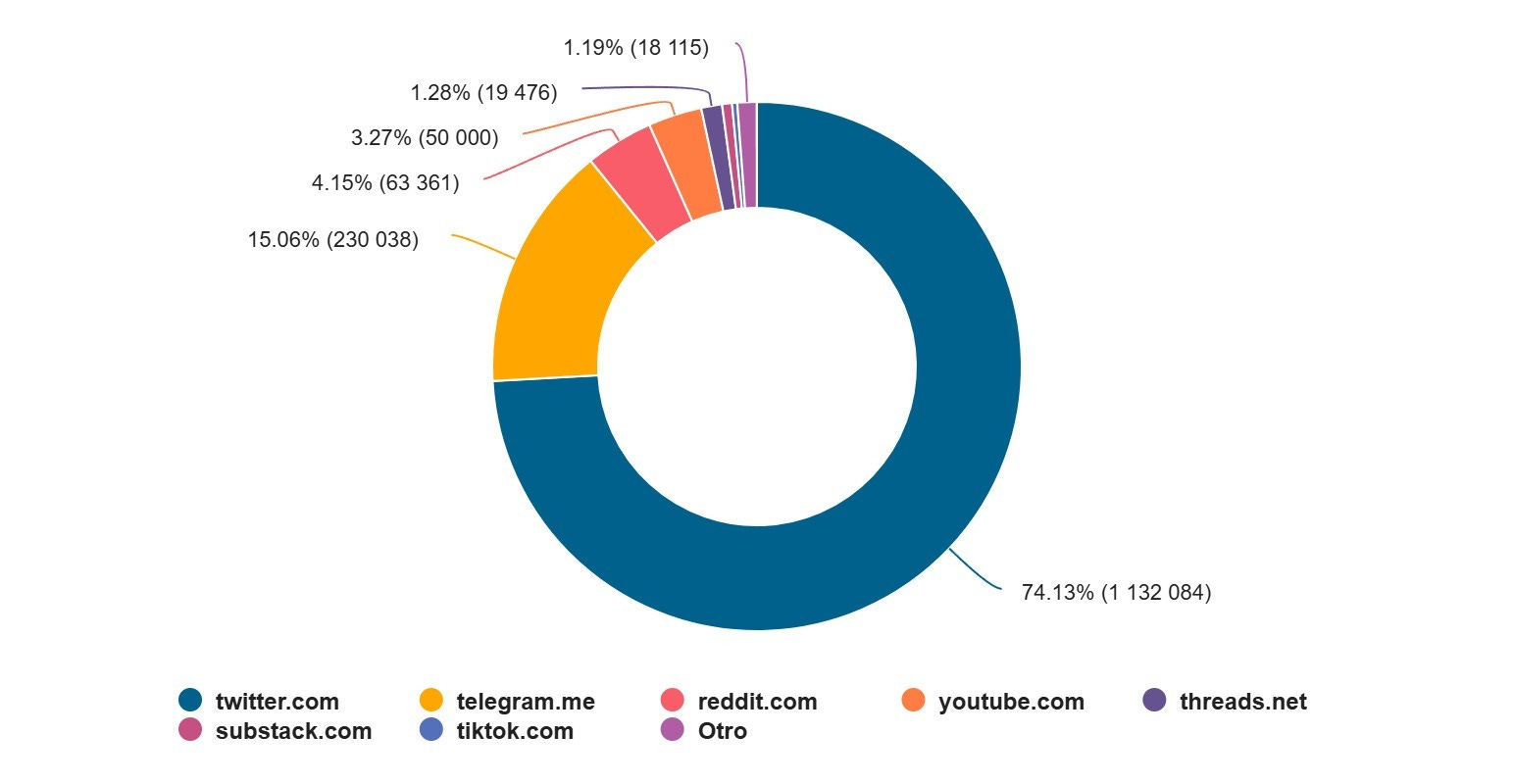
Figure 1. Volume and distribution of the digital conversation regarding the Argentine World Cup controversy, generated via social listening analysis on YouScan.
How did we get here?
The discourse labeling Argentina as racist was sparked the second the World Cup kicked off. The first wave of posts denouncing Argentina’s racism appeared during our match against Algeria. The tweet that started it all claimed the user “didn’t know Argentina was racist until this World Cup.” That single tweet went viral internationally, and unfortunately, some Argentines replied with highly racist remarks. (I’m deeply sorry and ashamed to even write this, and I apologize if this is triggering to read).
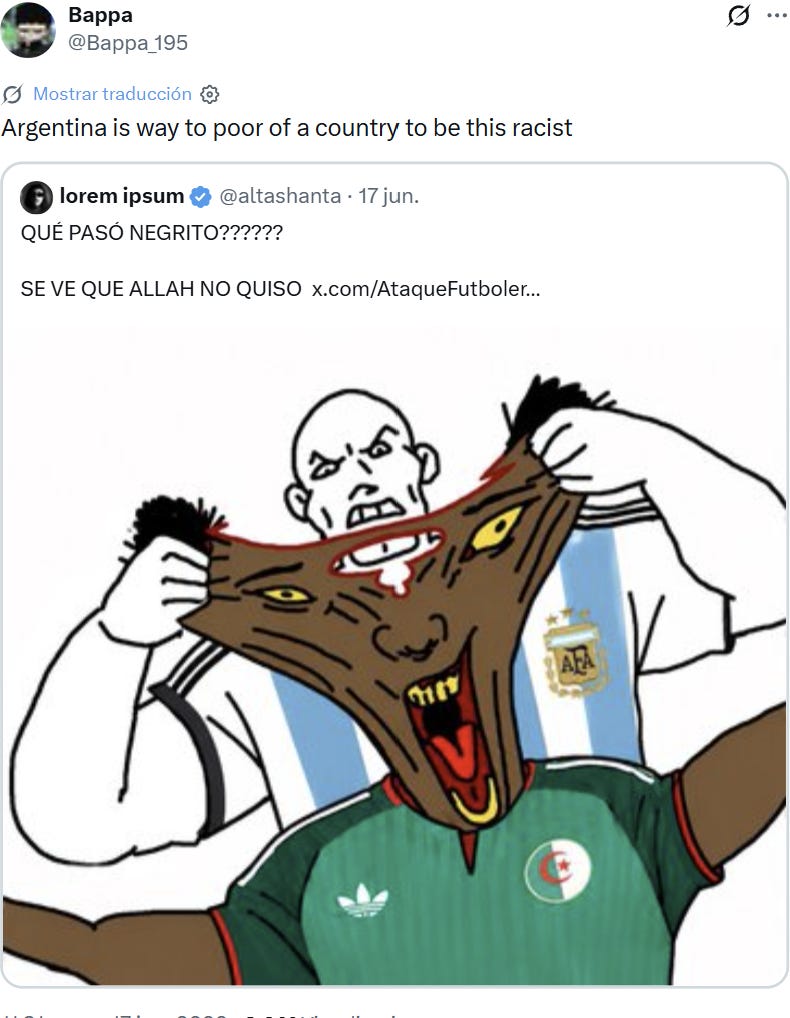
This particular tweet created a domino effect. Users from other countries began praising Argentina’s racism, which quickly morphed into a wider political and historical critique. The thread started pulling in Argentina’s geopolitical stance on Israel and Palestine, dug up past racist remarks by former president Alberto Fernández, and resurfaced the Reddit-fueled outrage from when Enzo Fernández chanted racist and hurtful comments against the French team. Within days, the internet had wrapped all of this into a neat package: Argentina is a historic haven for Nazis, and its Black population was systematically wiped out during colonization.
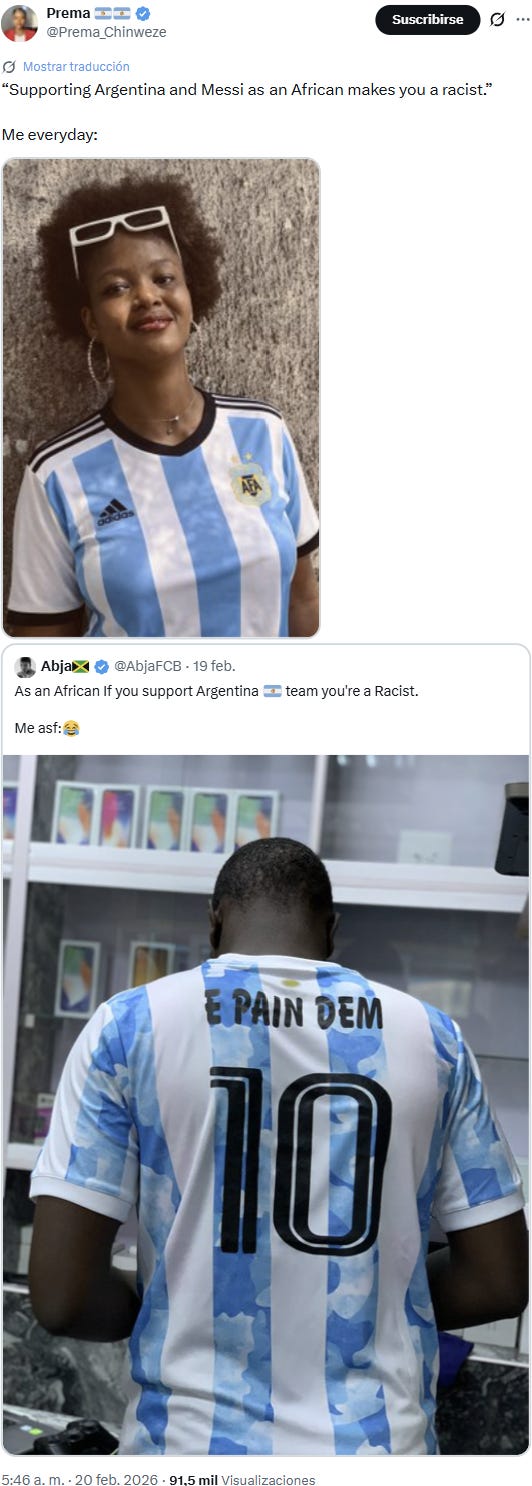
Surprisingly, some Black fans still reacted by showing their support for the Argentine National Team and sharing their love for Messi.
But then came the match against Egypt, triggering another massive peak in the conversation. This time, the target shifted: Argentina was accused of rigging the World Cup and being “the favorites.” At this point, Argentines weren’t just labeled as racists and Nazis; we were also deemed corrupt. People online began mocking the country’s economic situation, with comments pointing out that we are “too poor to be this racist.” To back this up, alleged stats started circulating claiming Argentina is “the most hated country in the world,” alongside accusations of corruption within the Argentine Football Association (AFA).
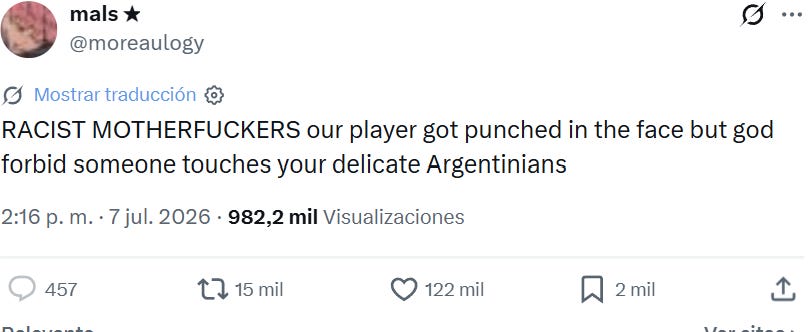
The initial racism discourse was the first brick in building a larger, more damaging narrative: that Argentina is an immoral, brutal, and undesirable country driven by a desperate need to show superiority.
Figure 2. Chronological volume and distribution of the digital conversation regarding the Argentine World Cup controversy, generated via social listening analysis on YouScan.
Is this a paid campaign?
The question everyone in Argentina is asking is: Is this an orchestrated, paid scheme? Is there an organization trying to build this narrative?
It’s a tough call because the narrative is incredibly widespread. However, after analyzing over 300,000 posts across different peaks of the conversation, some undeniable patterns emerge.
First, specific accounts, many of them paid or verified,seem to spark the conversation at key moments. Second, the language is highly repetitive. For instance, last week, right after Argentina beat Egypt, the exact same semantic construction popped up across hundreds of accounts: “disgusting human beings.” That is not a phrase people organically and simultaneously choose to tweet on their own.
That being said, my goal is not to claim that Argentina is completely free of racism and that this is all just a giant conspiracy against our beloved Messi. These are two very different conversations.
One research question is: Is this online conversation organic, or was it orchestrated? If so, by whom and why?
An entirely different, yet equally necessary question is: Are these allegations accurate? Is Argentina actually a racist country?
Inside the Data: The Three Types of Accounts Driving the Trend
When you look closely at the raw data it becomes clear that this isn’t just one giant, angry crowd. The accounts shaping this conversation fall into three very distinct categories:
1. The Orchestrated Bot Farms (The Paid Campaign)
These are highly coordinated accounts, and they are incredibly easy to spot once you know what to look for.
The “Disgusting Human Beings” template: As I mentioned, this exact phrase popped up everywhere. What gave it away as a bot campaign was that the phrase appeared translated into various languages across accounts that supposedly belonged to local users. It’s the classic copy-paste template translated through an automatic tool.
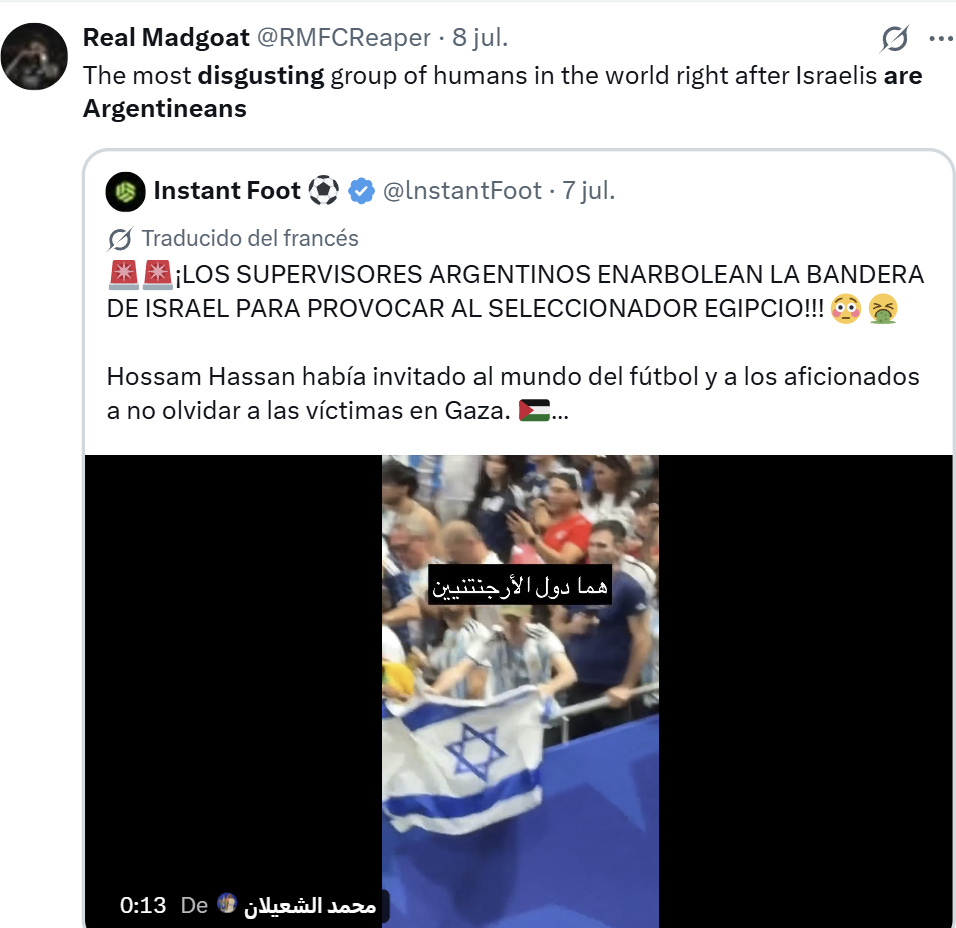
The bizarre profiles: If you click on these profiles, they have almost zero connection to football. They tweet about the World Cup, but their timeline is a messy mix of spam, porn, and selling masturbation toys. They are clearly part of the automated underbelly of X.
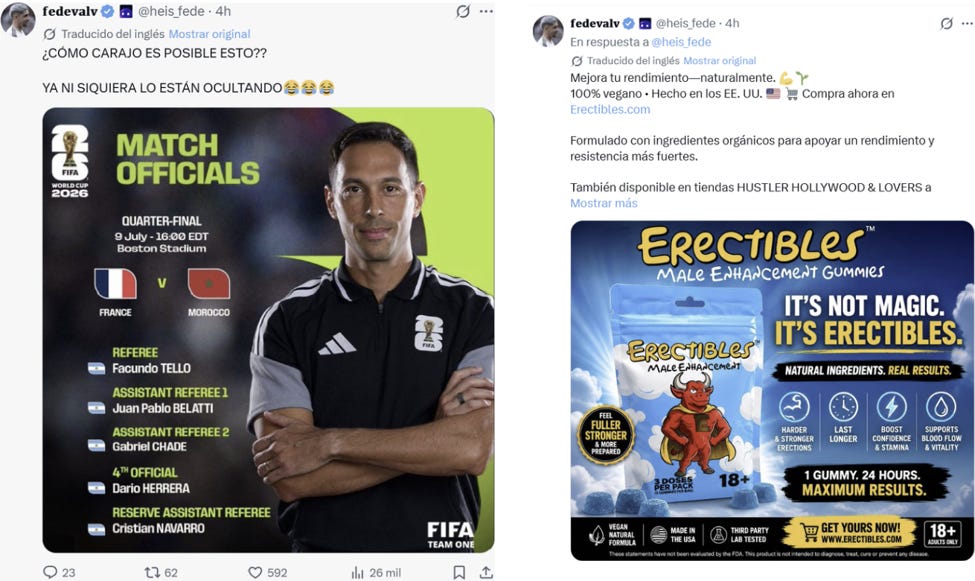
2. The Organic, Hurt Audiences
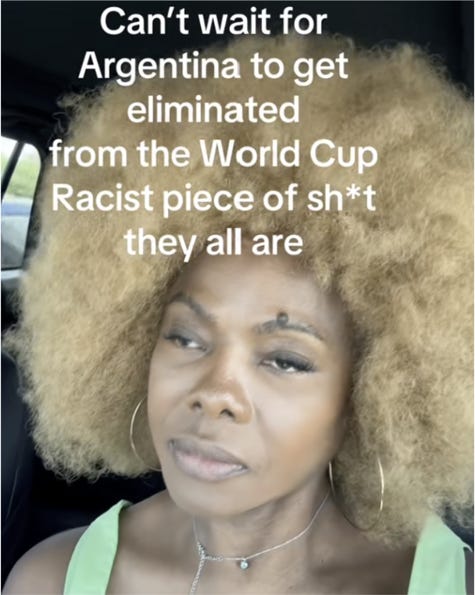
It’s crucial to emphasize that not everyone is a troll. This narrative is highly effective because it hits a very real nerve. Many users are participating in this conversation with genuine pain and anger. The racist chants by Argentine fans were a real trigger, and the resulting outrage is entirely organic. This group gives the campaign its weight; without real people feeling legitimately hurt, the bots wouldn’t have any fuel to burn.
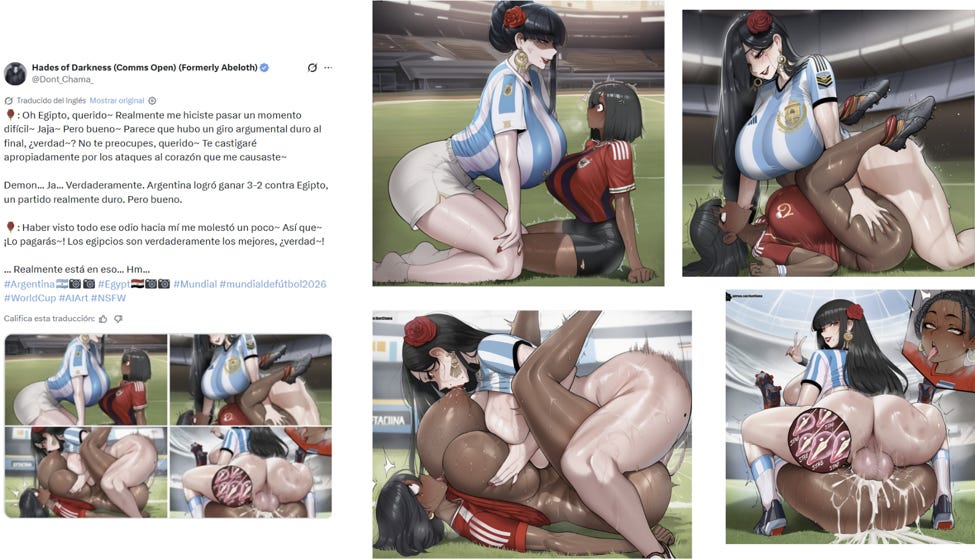
3. The Opportunists
Finally, there is a third group of users who aren’t part of any paid network and probably don’t even care about the underlying issue. They are simply opportunists who jump on the trend because it is highly controversial and guarantees views. To keep the fire burning and farm engagement, they add weird, provocative layers to the drama, even going as far as sharing highly pornographic versions of the banter.
My Personal Take: Is Argentina a Racist Country?
This brings us back to the question that started it all. Is Argentina racist?
Yes.But the way we experience and express prejudice is fundamentally different from the Anglo-Saxon model
I have deep praise for the UK, especially London, where most people truly value cultural diversity and embrace being a migrant-friendly city as a core part of their identity.
However, we cannot ignore that the UK also faces deep-seated systemic tensions, often fueled by fringe groups and radicalized political factions. Over the last couple of years, anti-immigrant sentiment has flared up in violent ways. We saw this with the severe far-right anti-immigration riots that swept across numerous British towns and cities, and the threat from extremist factions remains highly active, as evidenced by the recent arrests of far-right terror suspects targeting a major Islamic gathering in Suffolk.
This is not to say that one country is “more” or “less” racist than another. Rather, this contrast helps us understand why so many Argentines struggle to perceive racism as a pressing issue in their own society.
When outsiders look at Argentina, they see us singing the most outrageous, offensive football chants, or they look at our current foreign policy, like our alignment with Israel, which a huge part of our population strongly disagrees with.
For Argentines, however, that is where the conflict seems to end. We undoubtedly have a massive problem with racist and discriminatory language, especially in football culture, where people throw around incredibly hurtful remarks under the guise of “folclore.” It is offensive, it is unacceptable, and we absolutely need to reflect on it and stop it.
But the fundamental difference between Argentina and countries like the UK or the US is how this prejudice behaves. In Argentina, discriminatory attitudes rarely escalate into widespread, organized physical violence against racialized groups.
To put it bluntly: in Argentina, people call each other names, and the bias unfortunately remains normalized within the realm of dark, offensive, and bad-taste humor. However, it does not translate into physical assaults on the street, hate-fueled riots, or systematic hate crimes.
This is not to minimize the deep psychological harm that verbal slurs cause,hate speech is a form of violence in its own right, and we must call it out. But from a sociological perspective, this lack of physical escalation explains why the average Argentine doesn’t perceive racism as a critical danger or a crisis they need to deal with. Instead, the widespread reaction in Argentina to the international condemnation has been to simply deny the allegations, claim that “Europeans are the real racists,” and argue that the hatred toward our country has been entirely orchestrated.
To some extent, it has been. As we’ve seen, it is a dynamic heavily fueled by X, translated tweets, and a platform that prioritizes outrage on our “For You” pages. But it has also been fueled by real users who are genuinely hurt, and by an Argentine audience that, instead of reflecting, chose to deny any wrongdoing.
You forgot to mention the Argentinian team's attitude here, which has helped fuel the fire all the way post match with Parades (who got a red card). Let's also not forget the unsavoury celebrations after the last World Cup, between racist remarks about the French team and Martinez' petty banter against MBappé. Argentina has been running on its Messi(ah) for a decade, and is going to need a new figure to improve its reputation.
I see lots of statistics here, up until you get to the claims that there is no real racism in Argentina, except jokes in poor taste.